
First Impressions of Aruba
Aruba has long been known as “One Happy Island,” and the name couldn’t be more fitting. The moment you step off the plane, the warm trade winds, sunny skies, and friendly smiles make you feel instantly at home. While the island is famous for its beaches, Aruba has a personality all its own — a mix of Caribbean relaxation, rugged adventure, and vibrant culture.
Sunshine Year-Round
What makes Aruba especially appealing is its reliability as a destination. Sitting just outside the hurricane belt, the island enjoys sunshine nearly every day of the year, with temperatures hovering around 82°F (28°C). It’s one of the few places where you can confidently book a beach holiday at any time, knowing the weather will likely be perfect.
Aruba’s World-Famous Beaches
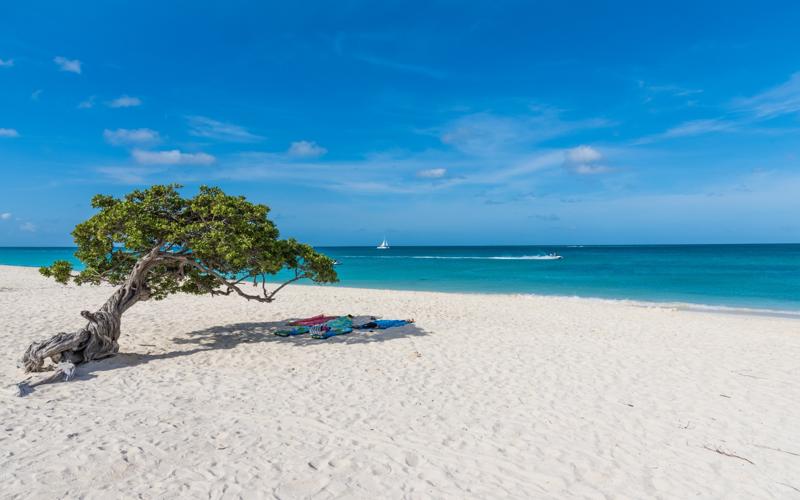
For most visitors, the beaches are the big draw. Eagle Beach is the star — often ranked among the best in the world — where soft white sand and the island’s iconic fofoti trees create a picture-perfect setting. Palm Beach, on the other hand, is where the action is: resorts, beach bars, and water sports keep it lively from morning until night. Families often gravitate to Baby Beach, a sheltered cove with shallow turquoise water that’s perfect for snorkeling and safe for little swimmers.
Adventures Beyond the Sand
But Aruba isn’t just a beach destination. Drive into the heart of Arikok National Park and you’ll discover an entirely different side of the island: desert-like terrain, caves decorated with ancient drawings, and rugged coastlines where waves crash dramatically against volcanic rock. The park’s most famous spot, the Natural Pool (Conchi), is a hidden swimming hole surrounded by lava rocks where the ocean feels both wild and protective at the same time.
Adventure seekers will find plenty of ways to get their adrenaline pumping, whether it’s off-roading across the island’s rocky north coast, diving to explore shipwrecks like the WWII-era Antilla, or snorkeling through colorful reefs teeming with tropical fish. Aruba may look small on a map, but it packs in a surprising amount of variety.
Food and Culture
The culture is just as rich as the landscapes. Aruba’s cuisine reflects centuries of influence from Dutch, Spanish, African, and indigenous traditions. A plate of keshi yena (a baked cheese dish filled with spiced meat or veggies) or a quick pastechi (savory fried pastry) tells the island’s history through flavor. Add in the abundance of fresh fish and seafood, and you’ve got a food scene that goes far beyond resort buffets. Evenings often spill into beach bars or casinos, where music and dancing keep the energy alive long after the sun has set.
Practical Travel Tips
Practicalities here are simple, too. While the local currency is the Aruban Florin (AWG), U.S. dollars are accepted everywhere, so you won’t have to worry about exchanging money. English and Spanish are widely spoken alongside Dutch and Papiamento, the island’s local language, so communicating is easy. Renting a car is the best way to get around if you want to see more than just the resort areas — it’s the key to finding those little local restaurants, hidden beaches, and quiet viewpoints that most visitors miss.
Final Thoughts
In the end, Aruba really does live up to its nickname. It’s an island where relaxation and adventure blend seamlessly, where the sun almost never stops shining, and where visitors quickly understand why so many people return year after year. Whether you’re dreaming of a beach escape, a cultural getaway, or an adventurous holiday, Aruba has a way of leaving you a little happier than when you arrived.